The Complex Appeal of Darkness : Why Villains Win Our Attention
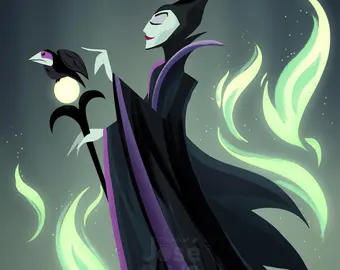
Allure Special Villains - Posters - Etsy India. (n.d.). Etsy.
In most films, viewers are meant to support the hero. Yet, when conversations about favourite characters arise any villain before considering the heroes. Now, why do villains, the people we are meant to dislike most, always seem to appeal to us? The audience prefers villains over heroes in entertainment because of their complex personalities, relatable and emotional motives and the excitement and unpredictability they bring to the narrative. The first reason why people are more attracted to villains is because they tend to have more complex and fascinating personalities compared to the heroes. Heroes are usually written out to be perfect and noble people who always play by the rules—but this sense of perfection is exactly what strips them of their depth and relatability. The “ideal” hero makes courageous sacrifices, controls themselves and saves the day. While these actions may seem admirable, they paint a picture of an unrealistic, and thus unrelatable, role model. Heroes tend to remain more distant from the viewer because they are rarely subversive. The hero is predictable; they will always do the “right thing.” On the other hand, villains are not bound by the same expectations which gives them the opportunity to transform and develop organically. Writers are given the freedom to make them change, make mistakes and reveal unexpected characteristics of a character as the story progresses. For instance, Loki, Thor’s evil brother in Marvel, is a popular favourite, not because he is a good person and always does the right thing, but because of his mysterious and mischievous behaviour to achieve what he desires. Across many films and shows Loki stars in, Loki slowly goes from a selfish and cunning villain into a conflicted outsider with a troubled past. His character development as a character is what keeps the audience engaged as they endure a rollercoaster of emotions. A villain's unpredictability is what attracts the audience’s interest since they never know what they are going to do next. The complexity is essential because it mirrors people in real life—people do not have perfect moral compasses, so we are able to connect to these often impulsive, hedonistic villains on a deeper level than saintly heroes. Secondly, people tend to gravitate towards villains because their motives are more comprehensible than heroes. Heroes often want to help others and find justice or equality. While these causes are incredibly significant, they are quite different from the realistic motives people experience today. However, the motives of villains are more accurately that everyday people often act on vices of anger, greed or jealousy. While the reader may not morally agree with a character’s actions, they often profoundly understand their motives. Villains are also often characterized with a distinct backstory which articulates the impetus for their incentives for the readers. For example, in Star Wars, Darth Vader’s descent into evil and darkness is mainly rooted in his fear of losing his loved ones, combined with the manipulation caused by Emperor Palpatine.These backstories are able to humanize these people that are otherwise cold and evil. It shows that their choices, even if poor, were impelled by a difficult personal history that many can connect with. However, heroes rarely have motives for how they act besides the simple idea of “upholding morality” Therefore their actions are more difficult to connect to on a personal level, but when the audience sees a person driven by grief, rejection or power, they are able to recognize a part of themselves or a reflection of society within that character. A villain’s motives are what makes them stand out because their actions, even if sick, are deeply rooted in the same emotions that people face everyday. Finally, villains bring excitement to the story. With no villain, there is no story. Heroes are only seen as impressive characters due to their abilities to solve the challenges that the villains create. Villains are responsible for pushing the narrative forward because they are responsible for creating a considerable amount of inciting incidents and plot twists. Every major plot, conflict or moment of action and tension usually traces back and is caused by the antagonist. They are essentially the essential pillar for the plot and the entire storyline. The villain is ultimately the essential context for the hero.The more dangerous, frightening and impressive the villain is, the more fascinated the audience is and the more skillful the hero seems. A hero that conquers a two-dimensional villain is not as beloved as one who defeats someone complex. The villain's actions are constantly what pushes the hero to grow by forcing them to confront their fears, weaknesses and evolve in order to overcome the ultimate threat. The antagonist’s actions impel the hero’s growth . and make their successes feel worthwhile. Take Spider-man, for instance. In the movie Spider-man: Homecoming, the Vulture serves as the main villain in this narrative. Without his actions of stealing advanced and dangerous technology to harm the lives of others, Peter Parker would not have grown that immensely as a hero just by helping out with stolen bikes in his neighbourhood. The Vulture’s unpredictable actions are what keeps the audience on the edge of their seats as he has never confronted a villain at the Vulture's level of danger and skill during that stage of his life as Spider-man. His constant presence is what drives Spider-man to make mature and difficult decisions regarding the balance between his regular teenage life and the life behind his mask. As the storyline progresses, Spider-man transforms from a young, naive and impulsive hero into someone who is capable of strategic thinking and knowing his priorities and sacrifices. Villains, though often created for us to hate, remind us that life is never only good or evil. They force us to confront the uncomfortable truths about human nature and make us question the motives behind our actions. Underneath their cruel exterior, we uncover a severe truth of complexity, pain, and capacity to cause fear and empathy. Villains reflect the messy realities humans are forced to navigate every day. They are not merely obstacles put in place for heroes to overcome, but instead they are mirrors that reveal our common desires and flaws, followed by our room for growth. With their ability to captivate our attention and stir our emotions, villains have obtained a power that is able to outshine the heroes themselves—proving that sometimes the most compelling characters in a story are often those we are told to detest.