Latest Trends: Havergal Students’ Shopping Habits
Writer: Samantha Zhang
Editor: Quinn Smith
Labubus, Stanley cups, and Liza Gozlan bracelets: around Havergal, items like these can be spotted on practically every other student. So what exactly is influencing these purchasing decisions? Through a Google Form survey, we gathered data from over 100 Upper School students, revealing trends around many of their consumption habits. Here is what we learned from each grade!
In-Person vs. Online
When it comes to shopping, nearly 80% of Havergal students prefer in-person shopping over online. This is likely due to the allowance for better interaction with products, receiving them instantly and avoiding the often weeks-long waits that come with online shopping. Although, it is notable that Grade 7 and Grade 11 students have the highest proportions of those who prefer buying things online.
Weekly Spendings
Now, to our surprise, nearly half of the respondents reported a low weekly spending of up to only $25. In fact, about 65% of students spend less than $50 per week. These numbers are certainly reasonable, showing just how responsible Havergal students are!
So where are they spending most of their money?
A whopping 90% of students said food, which, of course, includes Starbucks. Following that, the second most popular category was clothing, with over half of the respondents selecting it as one of their top choices. Interestingly enough, transportation expenses come third, tied with beauty and skincare. Although not covered in this survey, it would be quite interesting to track students’ spending habits during the holiday season and see what types of items they purchase then!
Influences
There are many factors that can easily and often influence a buyer’s choices. At Havergal, these drivers are observably evenly distributed. ‘Social Media & Trends’ takes the lead in factors that influence decision-making, with ‘Personal Needs’ coming in a close second. Family & Friends, as well as Discounts, can also persuade students to make purchases–though less frequently.
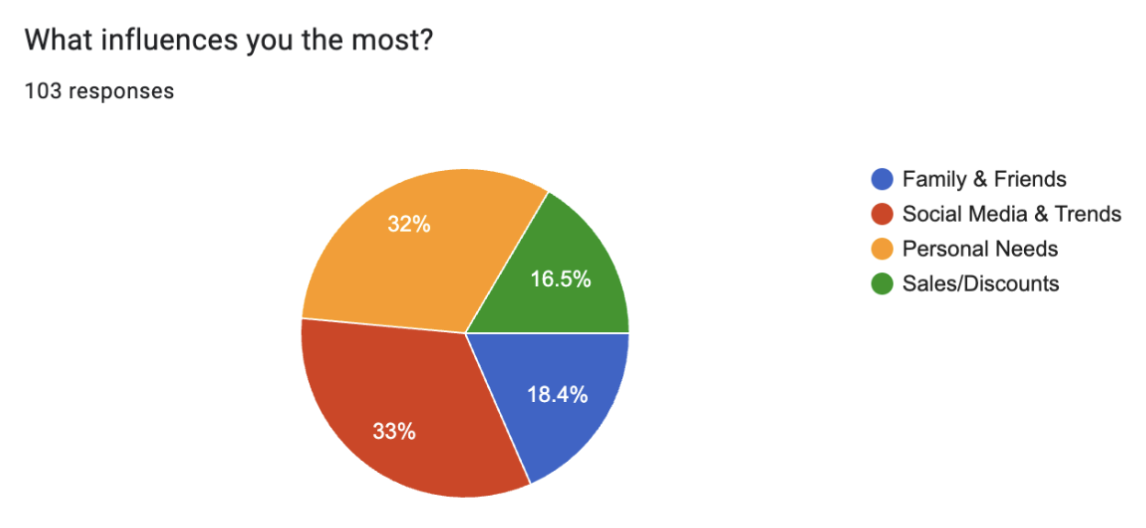
Surprisingly, nearly half of all respondents admitted that brand names play a somewhat important role in their purchases. This can likely be attributed to online advertising, especially through social media. We asked students to rate the effect of internet influences on their purchasing decisions on a scale from 1 (“not at all”) to 5 (“very strongly”).’ As for the results, over 80% of students gave a rating of 3 or higher. This small poll truly highlights the significant impact that social media influencers and trends have on the consumer behaviours of teenagers today.
Opinions on Trendy Items
This is where much controversy lies among HC students: regarding products that gained their fame on TikTok, a heated tie emerges in the Like and Dislike vote counts, each accounting for around 25% of votes. Nearly 40% of students chose Neutral, showing that many are undecided or indifferent. However, opinions of hate seem to take the win, with over 10% of all participants picking the option of Strongly Dislike.
Here are some comments that participants shared:
“I don't dislike them, but I don't purchase them just because they are trendy”
“...overhyped and overpriced”
“I think Labubus are funny. Would I ever buy one, no. But I respect them.”
“I like what I like.”
Conclusions:
Purchase decisions follow us every day - from what we grab in the school dining hall to what we spend hours browsing through in Yorkdale. In this age where technology and social media are quickly becoming staples of everyday life, it is important to both observe the influences they have and–when necessary–attempt to limit them. However, while social media, trends, and personal needs all play a role, students do still have their own clear favourites in their daily routines. In the cafeteria, for example: cookies, muffins, and Oreo cheesecake bars consistently top the list. This shows that even small choices can reveal patterns in our preferences and what we go for again and again. Moving forward, it is important for us as students to be mindful of our choices. Even small decisions can create lasting impacts, so it is essential to reflect on what truly influences us.